
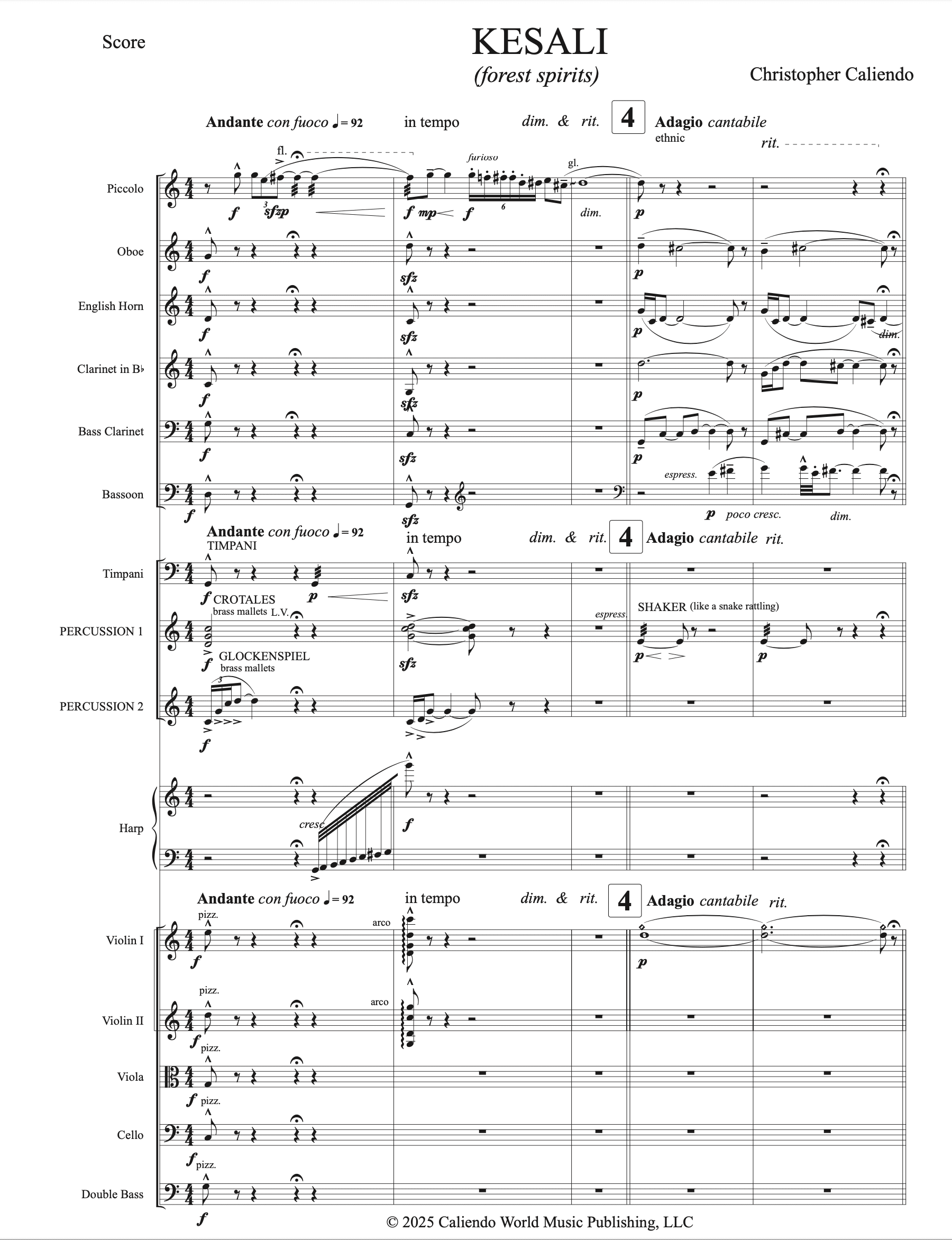
I. Kesali (Forest Spirits)
The opening movement, Kesali, is inspired by a Romani rite of passage: when a child entered puberty, they underwent a night-long vigil, sleeping alone in a great forest. In this liminal space, the child is visited by the Kesali—forest spirits who embody both wonder and menace. Guided by the spectral presence of the Choviháno, the piccolo represents the child’s restless, searching voice. Ethereal tremolos, sudden silences, and fluttering figurations evoke the spirits’ capricious movements, while the orchestra conjures both the majesty and the hidden dangers of the woodland. The music alternates between playful charm and haunting mystery, mirroring the child’s oscillation between fear and fascination.
Duration: 3
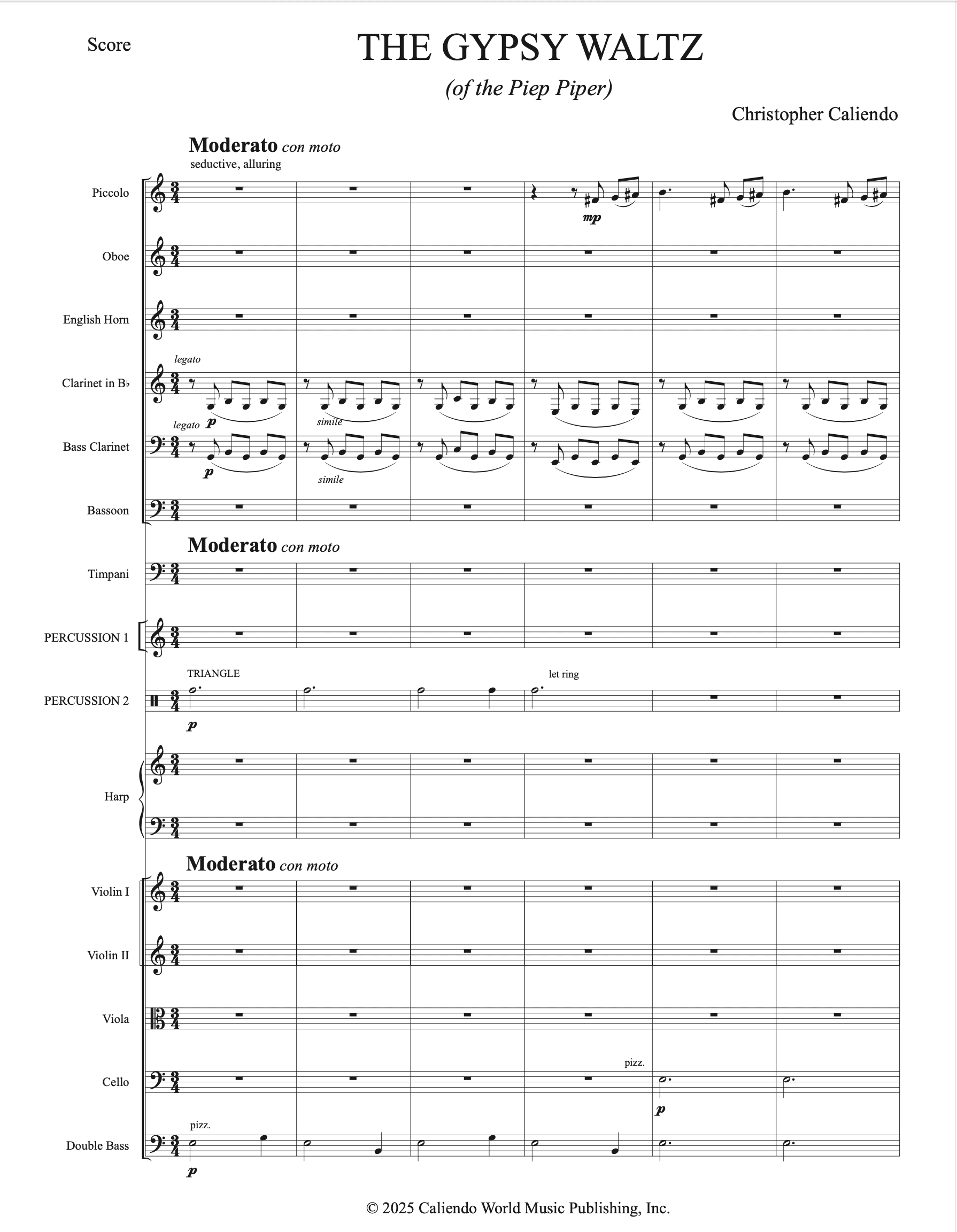
II. Gypsy Waltz (The Pied Piper of Hamelin)
In Gypsy Waltz, Caliendo reimagines Robert Browning’s tale of the Pied Piper through a Romani lens. The piccolo takes on the role of the Piper, weaving intoxicating melodies that lead both rats and children in a mesmerizing procession. The waltz rhythm is deliberately off-kilter and syncopated, emphasizing music’s power to enchant, seduce, and deceive. Ornamented passages and intricate figurations evoke the capricious, elusive nature of folk magic, while the orchestra alternates between playful accompaniment and ominous shadows, reflecting the duality of charm and threat. This movement is both a dance of delight and a cautionary tale of irresistible allure.
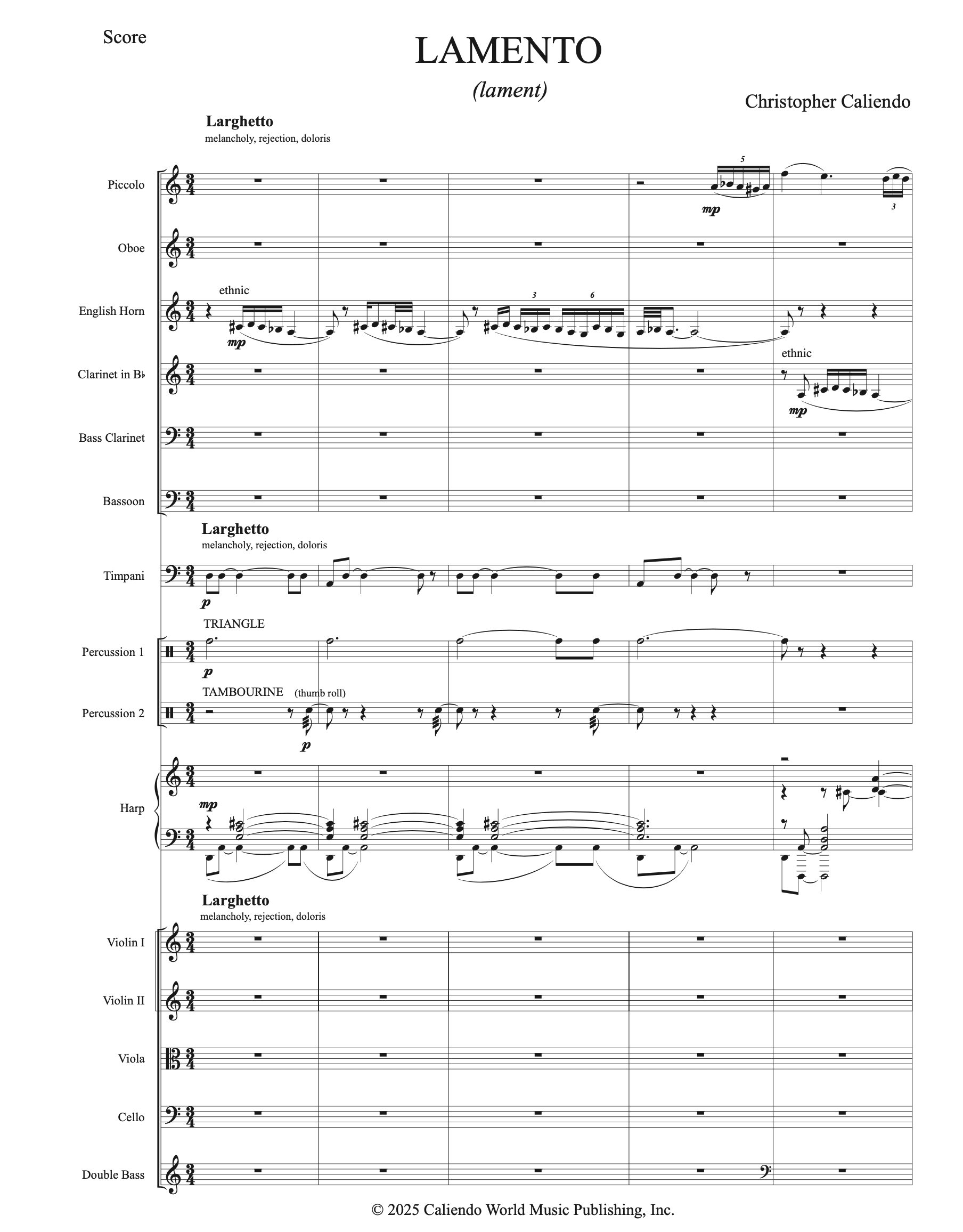
III. Lamento
Lamento stands as a solemn remembrance of the Romani victims of Auschwitz. The piccolo’s plaintive lines portray the voice of a young boy paraded by Mengele before his tragic fate, while the orchestra provides a mournful, elegiac backdrop. Sparse, open textures and descending motifs evoke grief and loss, and moments of fragile silence underscore the enormity of the absence. Through chromatic tension and anguished gestures, the music honors not only the boy’s innocence but also the silenced voices of tens of thousands, a stark reminder of cultural annihilation and the resilience of memory.
Duration: 3’50
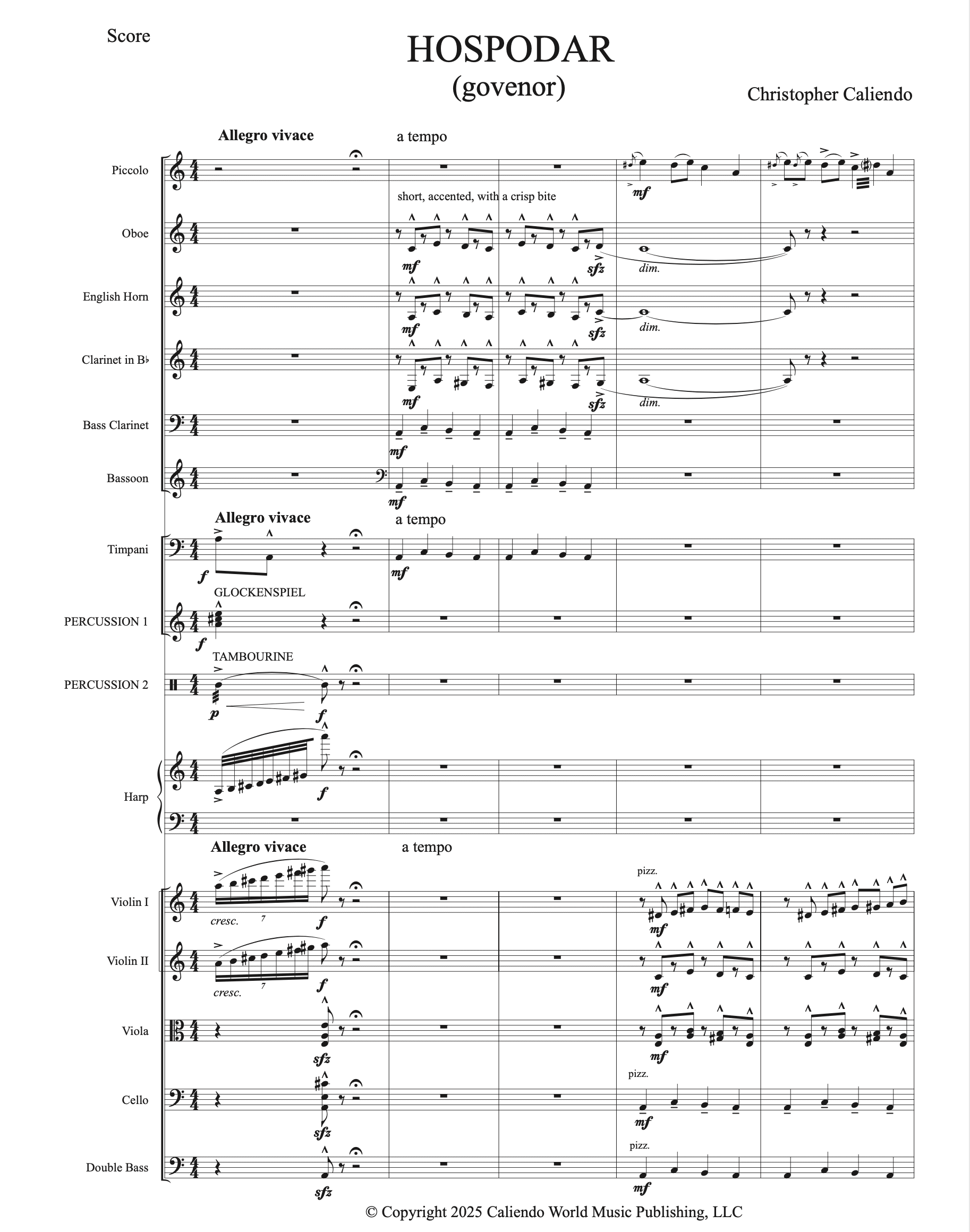
IV. Hospodar
The final movement, Hospodar, confronts the historical oppression of the Romani, named for the rulers who once enslaved them. The piccolo’s voice boldly challenges the orchestra’s weighty authority, symbolizing the defiance and enduring spirit of a people who survived adversity. Vigorous rhythmic drive, martial figures, and triumphant fanfare-like motifs propel the music to a rousing climax, yet playful passages and clever, witty flourishes punctuate the intensity, reflecting the Romani’s irrepressible joy and humor even in the face of hardship. Moments of lyrical respite reveal the depth of endurance and humanity, and the movement closes with a radiant affirmation—a tribute to the Romani capacity to transform suffering into vibrant song, resilient culture, and enduring spirit.
Duration: 4’30
Total playing time: 18 minutes
Reviews
There are no reviews yet.